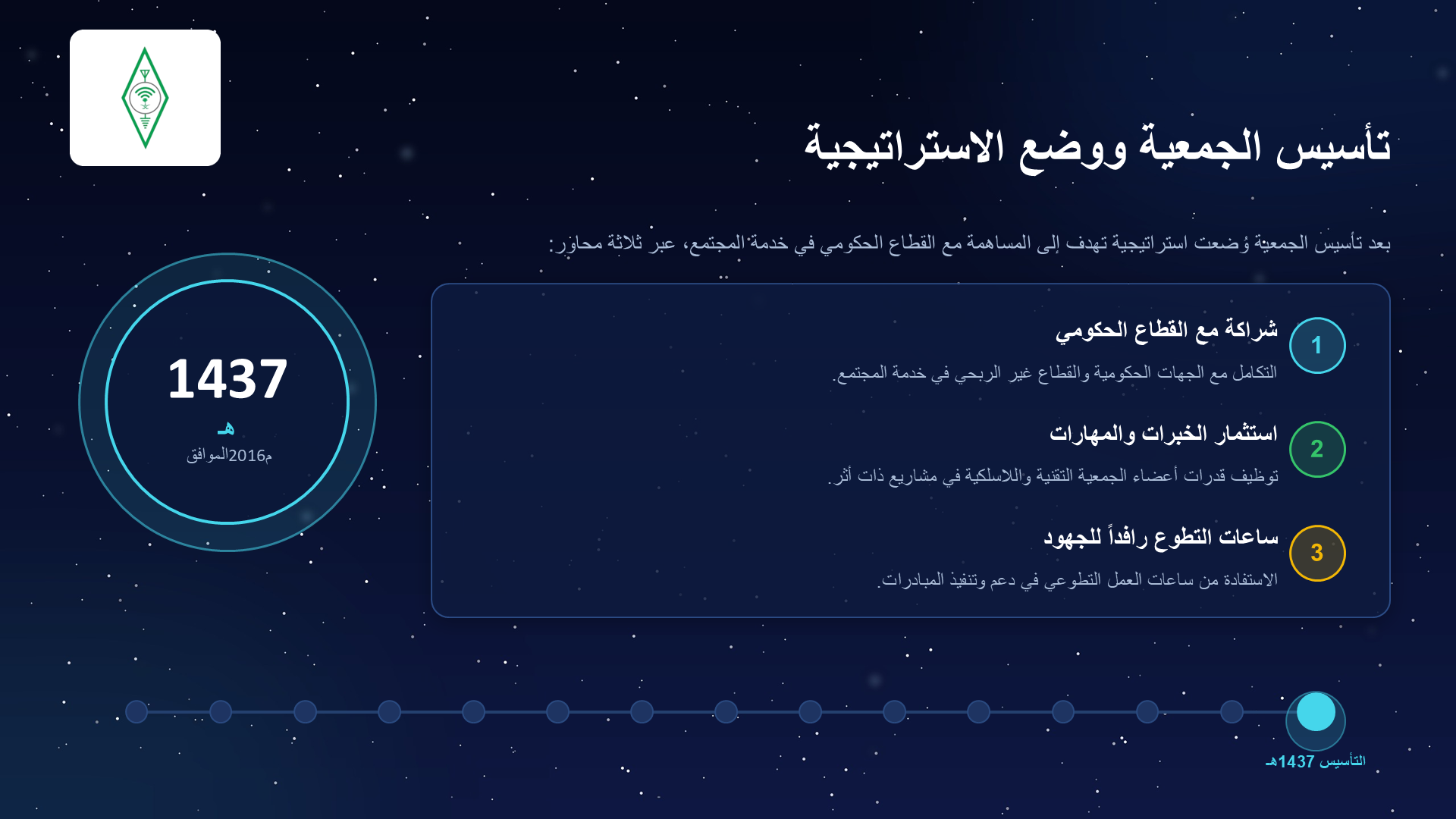
Initial Initiative
The project begins in the wider astronomy outreach and education initiative documented in the lecture.
Explore this part of the full lectureProject Story
Follow the development path from the first initiative and local engineering decisions to observation, calibration, and scientific interpretation.
Timeline
The project grew from an initiative and early collaborations into telescope engineering, university deployment, scientific observations, and later integrated hardware/software work.
The project begins in the wider astronomy outreach and education initiative documented in the lecture.
Explore this part of the full lecture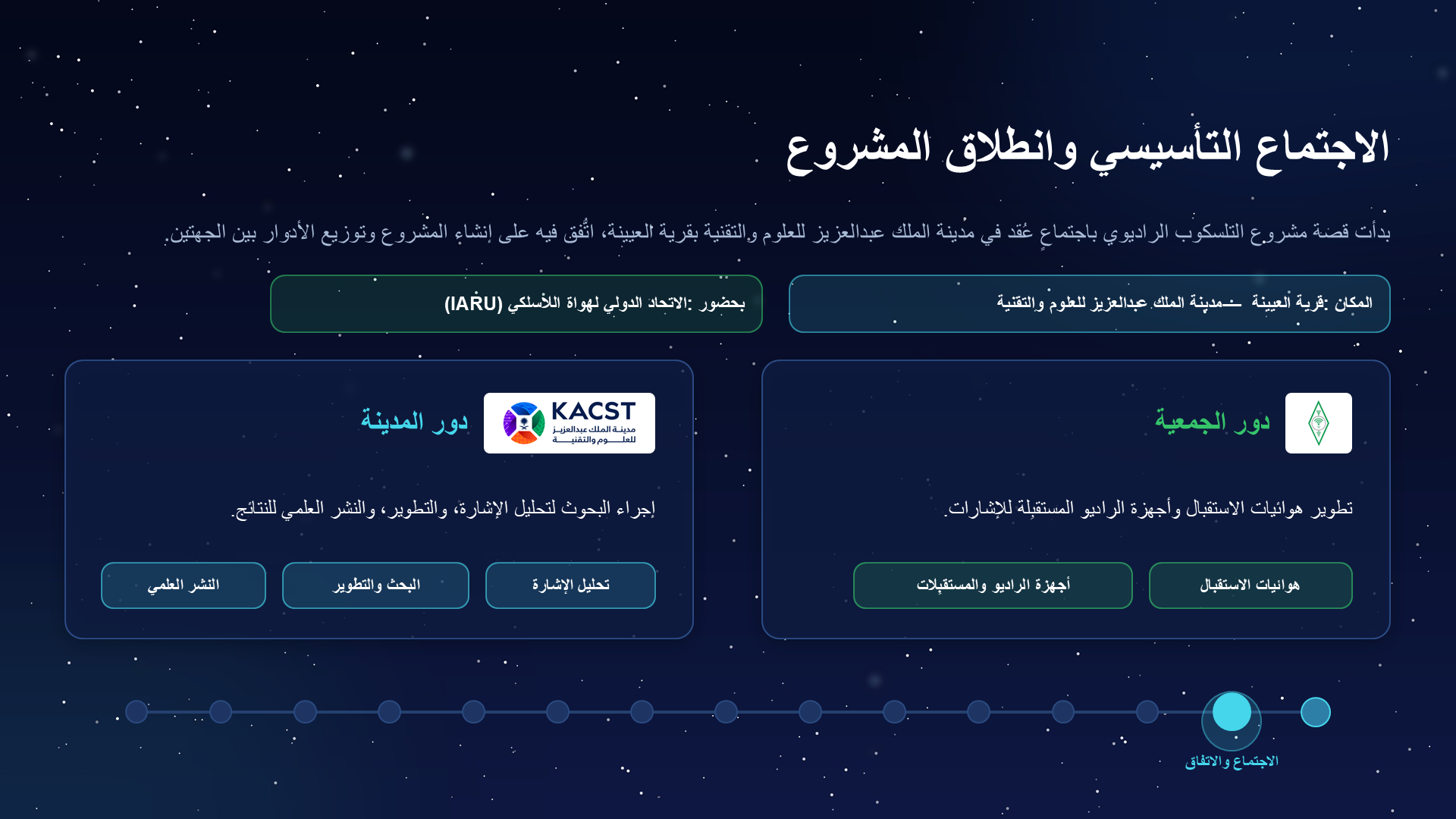
Early meetings and partner roles shaped the first practical direction for a local radio telescope effort.
Explore this part of the full lecture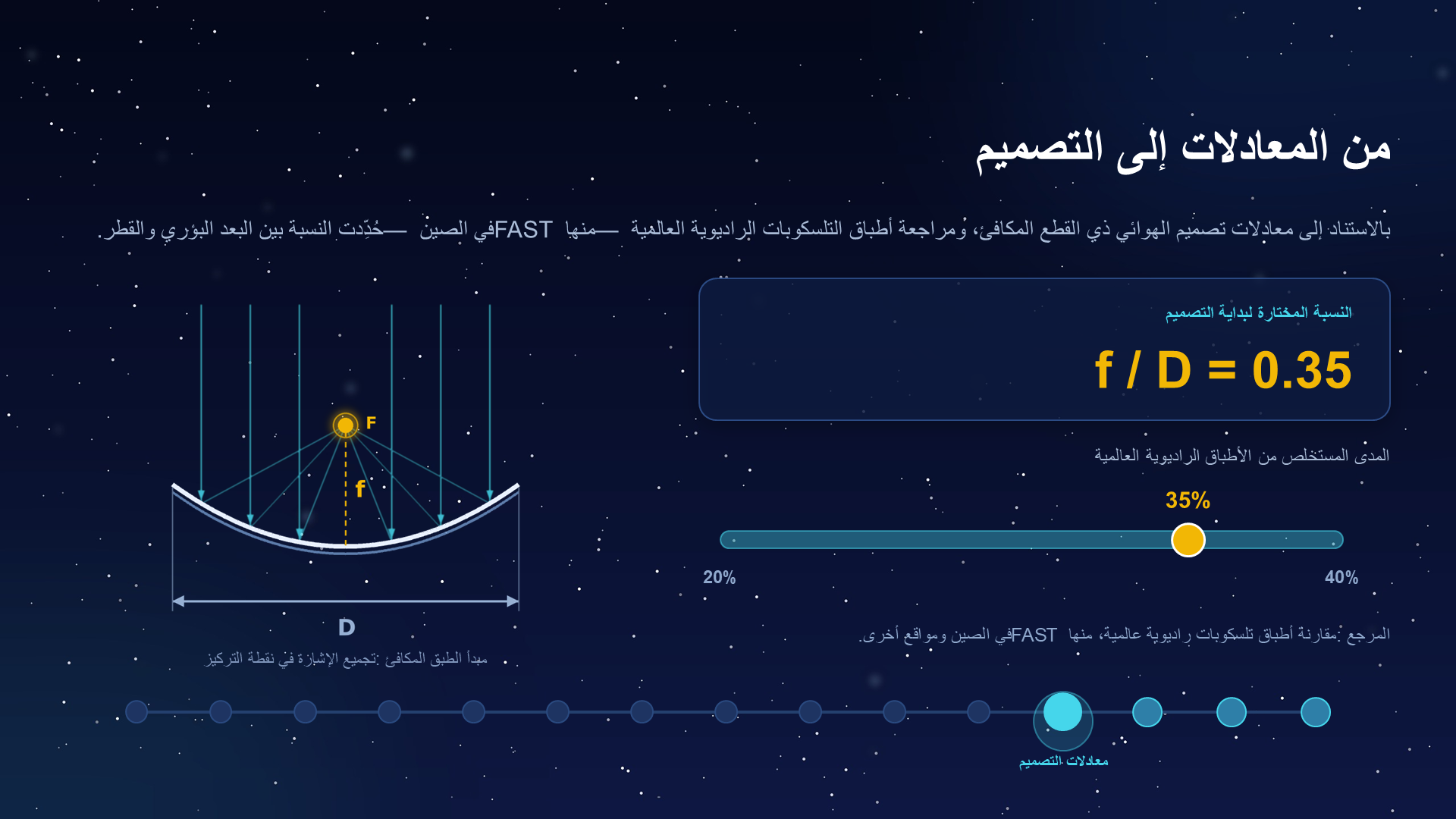
The team moved toward local parabolic-reflector design, including the engineering choice of approximately f/D = 0.35.
Explore this part of the full lecture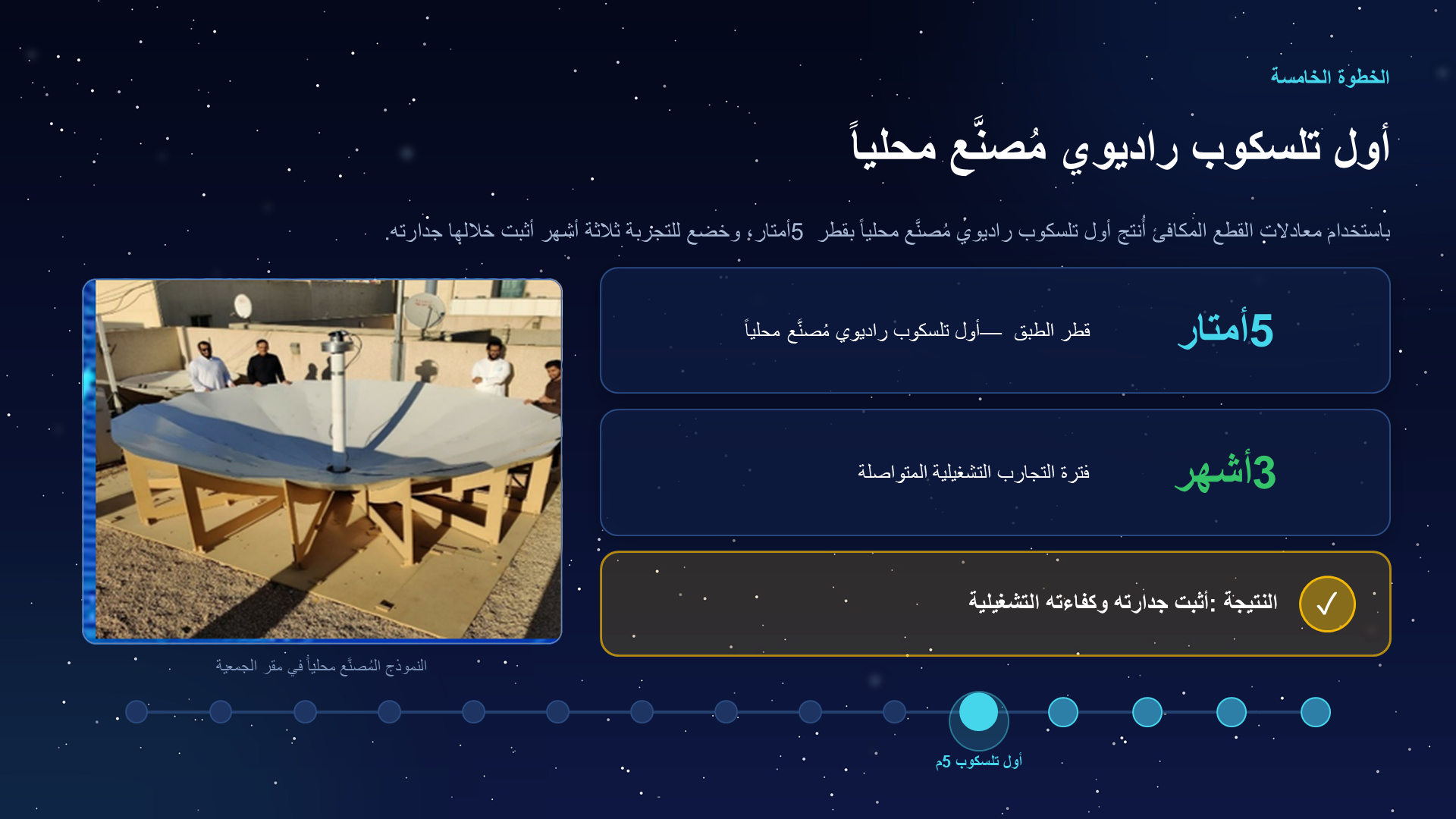
The first locally manufactured 5 m telescope became the hardware foundation for the educational radio astronomy system.
Explore this part of the full lecture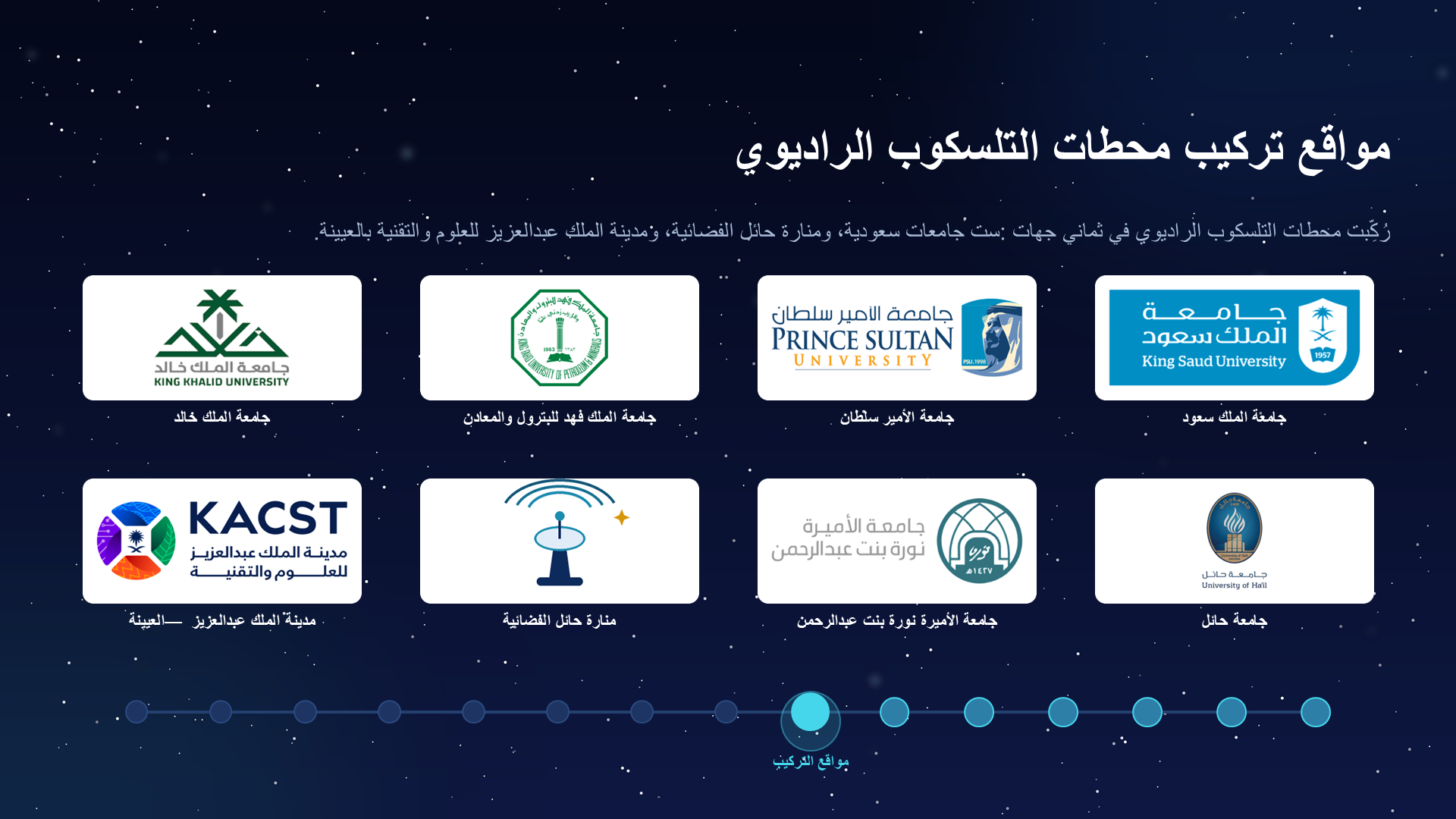
The project expanded into a university network. The 2025 IEEE paper reports replication across five Saudi universities at the published implementation stage.
Explore this part of the full lecture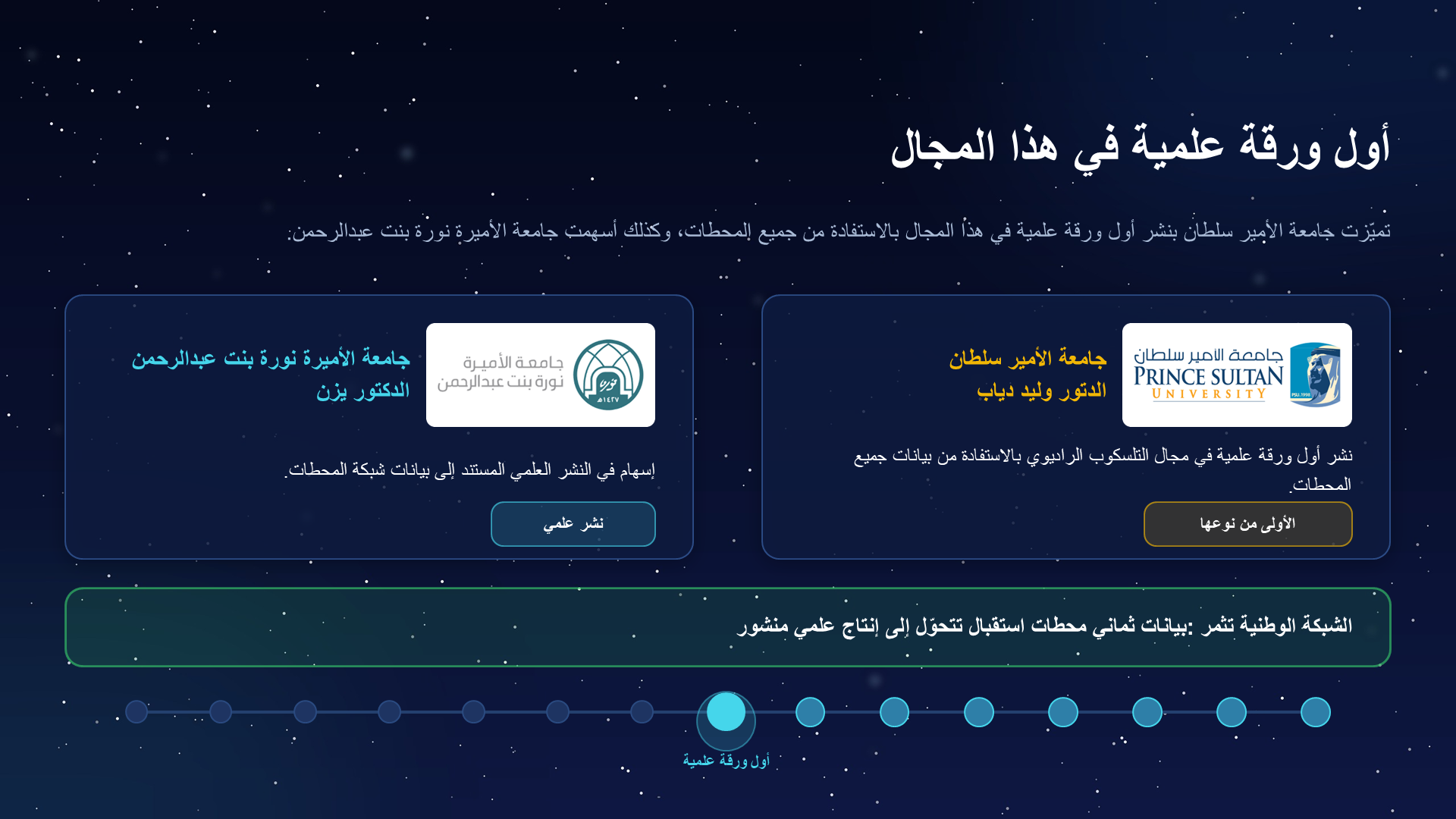
The telescope platform supported H I observations and student-facing signal analysis, moving the work from construction to science.
Explore this part of the full lecture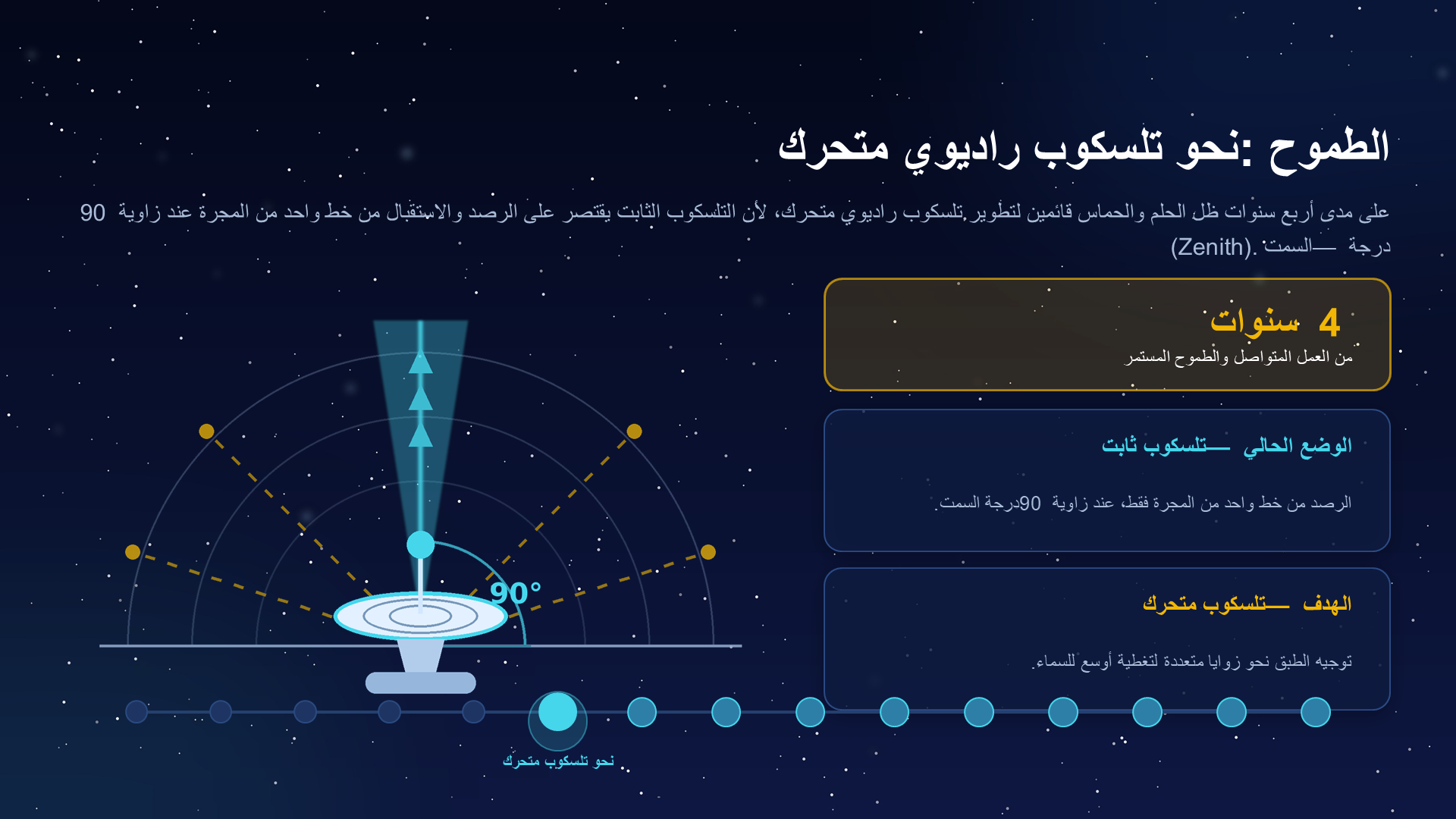
The historical fixed zenith-pointing system used Earth rotation for transit scanning, while later material motivates automated pointing.
Explore this part of the full lecture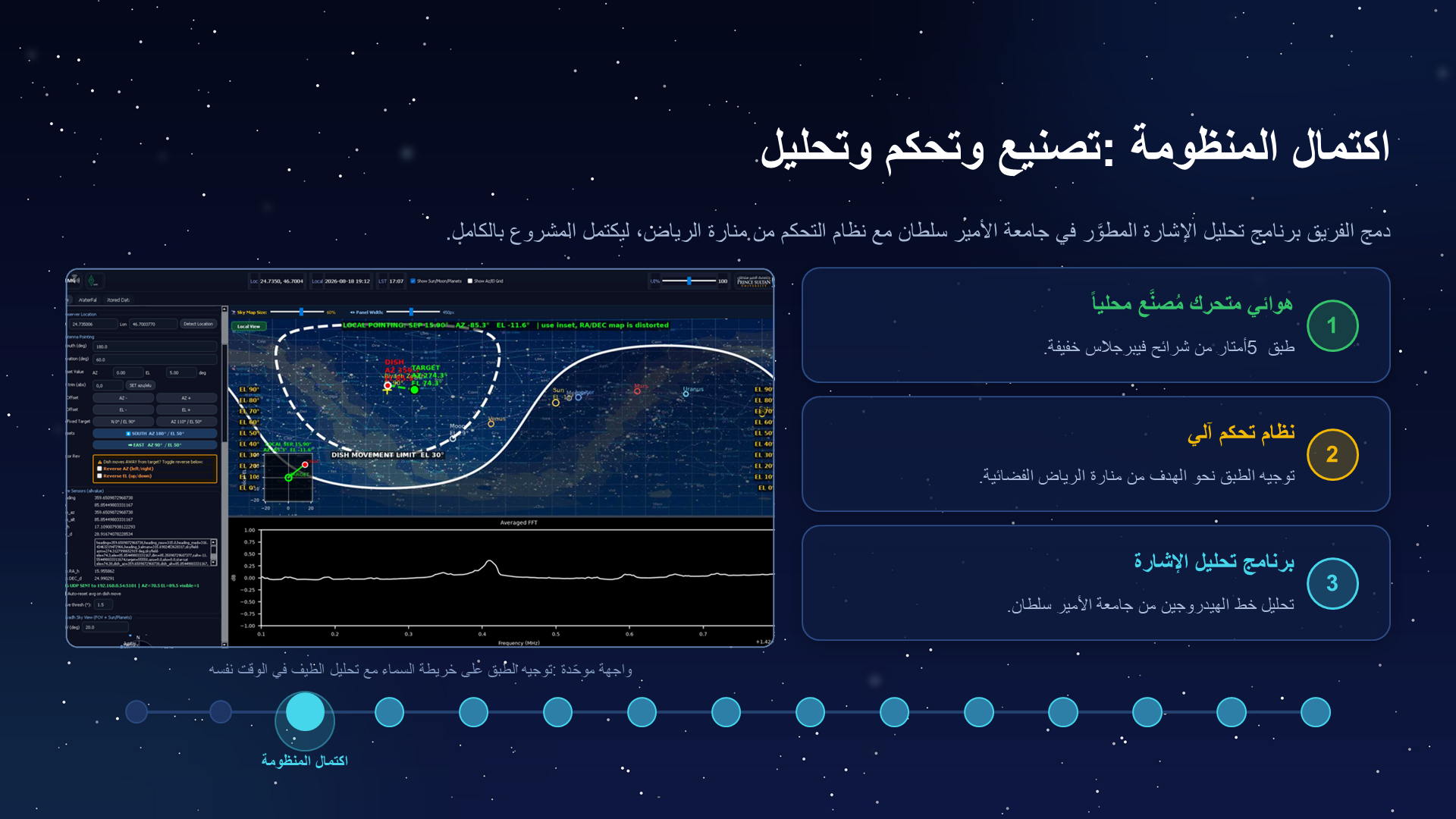
Later work connects telescope control, signal-acquisition software, calibration, and scientific visualization.
Explore this part of the full lecture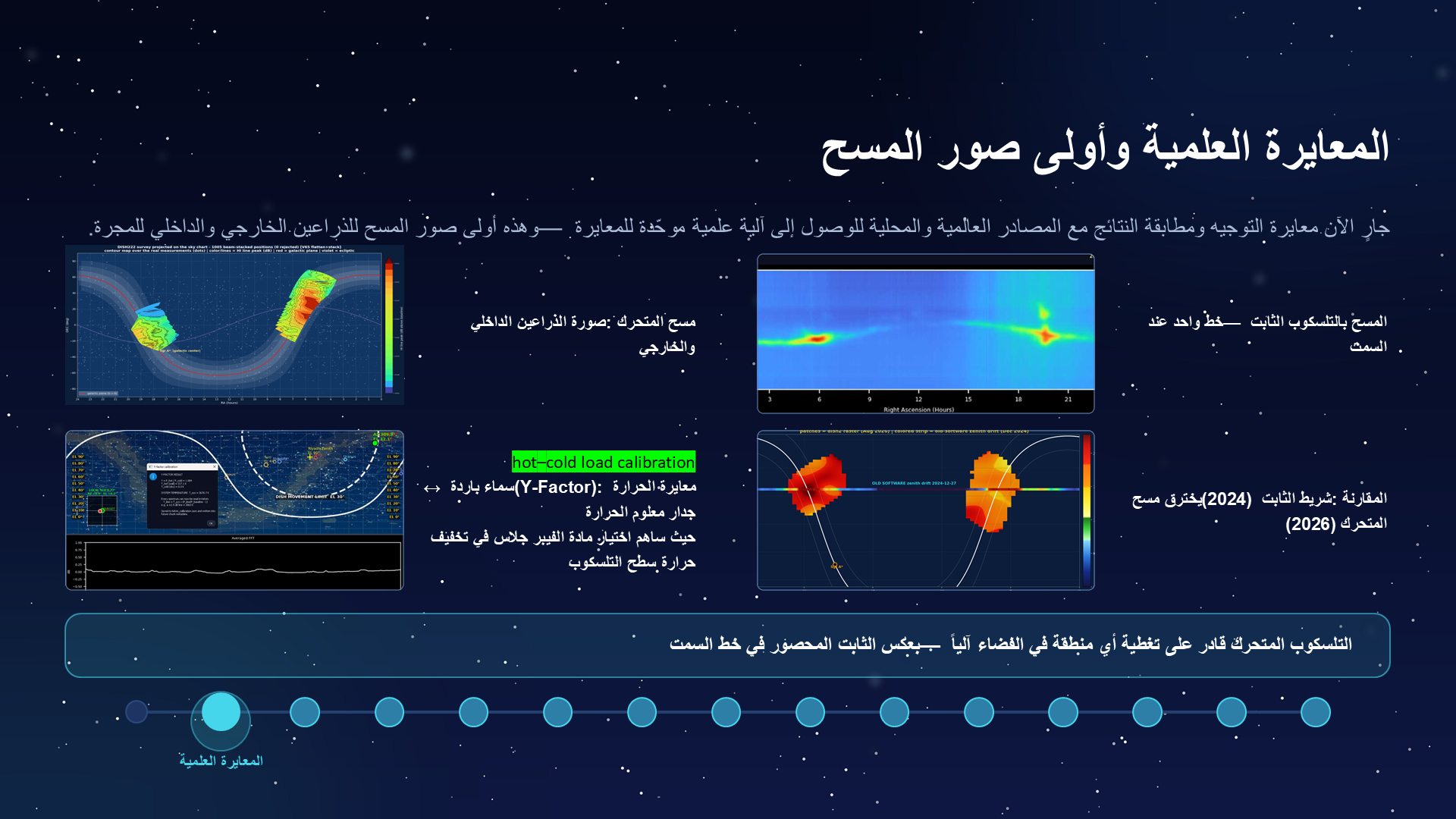
Calibration and first survey products show the transition from engineering system to measurable Milky Way observations.
Explore this part of the full lecture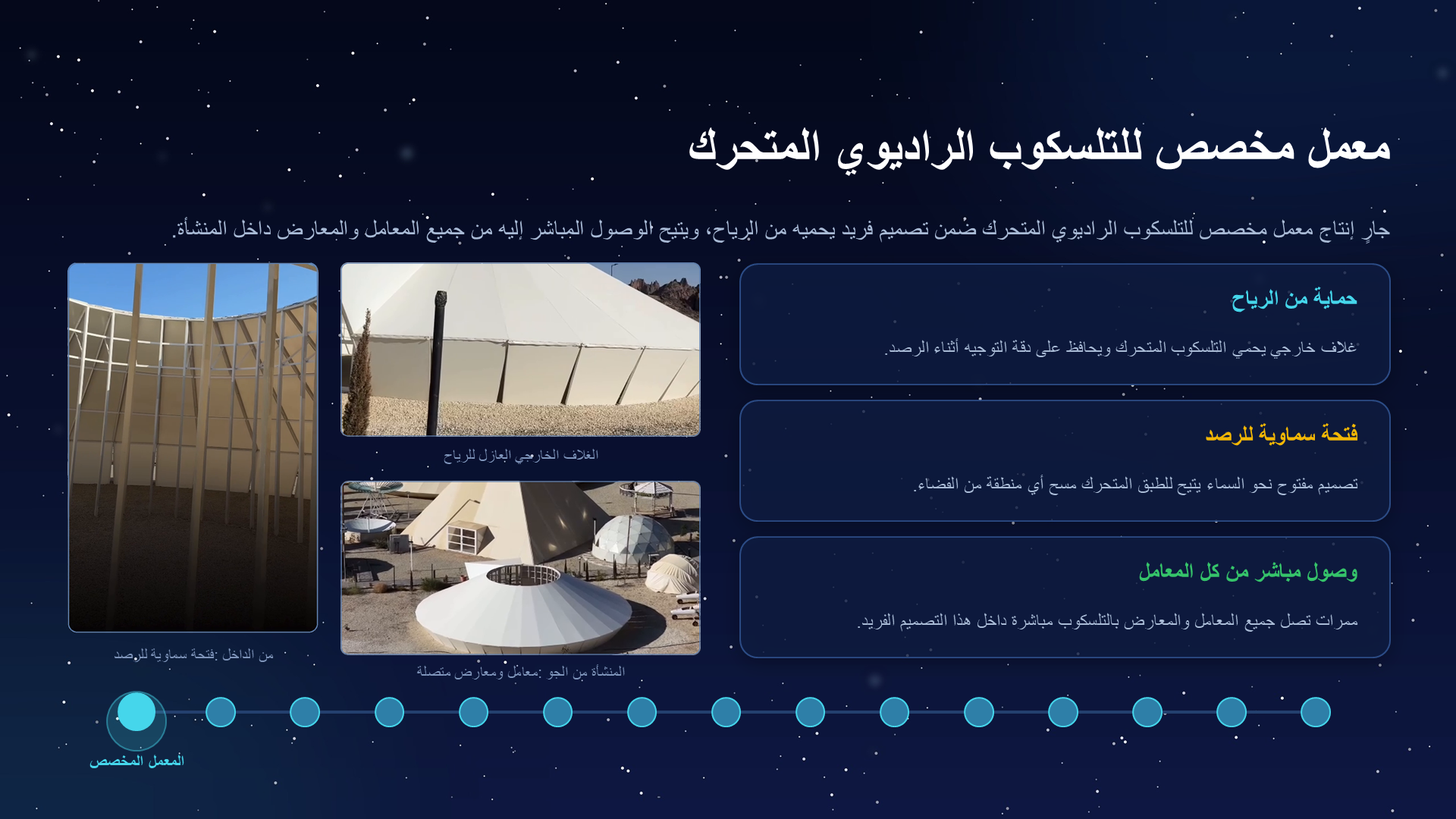
The current portal presents the complementary engineering, science, and education dimensions of the project.
Explore this part of the full lectureTelescope System
A practical path from the neutral hydrogen line to an interpreted spectrum.
Pointing and Observation
The portal separates the published fixed transit-scan concept from later moving-telescope capabilities.
In the published fixed implementation, the telescope points at zenith and Earth rotation carries sky regions through the beam. This supports transit-scan measurements without implying motorized tracking.
For moving systems, a sky target in RA / Dec can be transformed into azimuth / elevation, sent to telescope pointing, and then measured as a spectrum.
Engineering to Science
It receives H I emission, processes and calibrates the signal, connects observations to sky coordinates and velocity, and supports an educational and scientific view of the Milky Way.